One of our plotters thought she would try something unusual and decided to grow watermelons on her plot having previously grown them successfully in Ukraine.
The plants were grown on plastic mulch and covered with agrofabric of 50 gsm. No fertilisers or irrigation was used. To increase the chances of success, a grafting method was used with a Lagenaria, or bottle gourd rootstock.
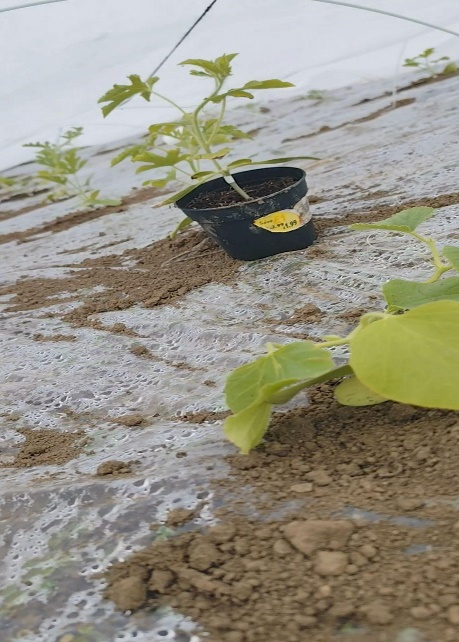
The grafting method gives a plant a stronger root system that can resist cold temperatures, diseases, and root rot. For watermelons, the most common rootstock is Lagenaria — a wild, hard-shelled gourd and seeds are readily available.
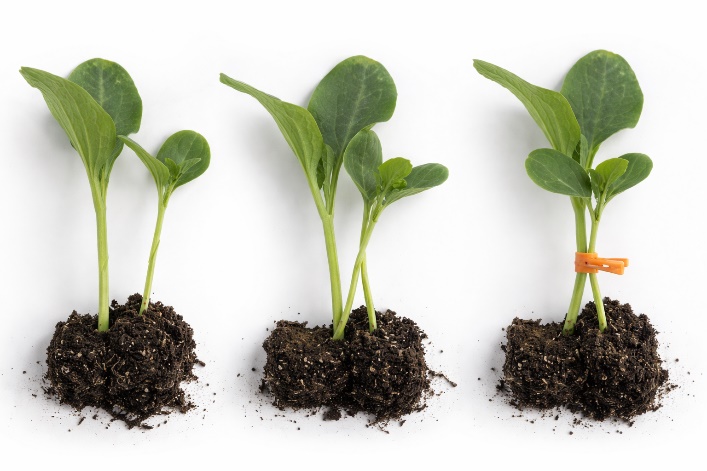
Tanya used the Tongue approach where the stems of both plants are cut and joined together with a small clip. It takes about ten days for them to heal and start growing as one. After that, the watermelon stem is cut below the graft, and the Lagenaria stem above its cotyledon leaves.
When the grafted plants were about 40–50 days old they were transplanted into the soil and after a month, flowers were present. As they were grown under a fleece cover Tanya pollinated them by hand. It took 50 days from pollination to a ripe watermelon and each grafted plant produced one or two ripe watermelons weighing 3 – 4.6kgs.
Fellow plotters were amazed at the result and in 2026 we are likely to see many more trying to grow watermelons. Tanya said “ following my success in 2025 I plan to start planting earlier, and try growing some fruits under the plastic mulch and some above it. I love working on my new plot and meeting my fellow plotters”